Wednesday, 10 November 2010

Experiencing Harris Tweed


The story of Harris Tweed is one of a remote island community that lies between the Highlands of Scotland on the north west tip of Europe and the North Atlantic Ocean. I have lusted over this truly unique fabric and have longed to visit the beautiful setting in which it is created for some time now. Thankfully, the launch of the Nike Air Royalty Harris Tweed meant that myself and Susie were invited up by the sportswear giant. So, after traveling up to Glasgow we hopped on to an unnervingly small Flybe plane to be taken to the Isle of Lewis capital, Stornaway. From the comfort of our room in Braighe House, we watched the as the super strong winds, rain and sea spray beat down down on the window. Fortunately, the weather improved enough the following morning to enable Lorna Macualey of the Harris Tweed Authority to talk us through the creation process. I eagerly followed and snapped away at each well honed and practiced process from start to finish, documenting the intriguing relationship of mill and weaver. I should warn you, the below post is an epic one so why not make yourself a cup of tea and read on...
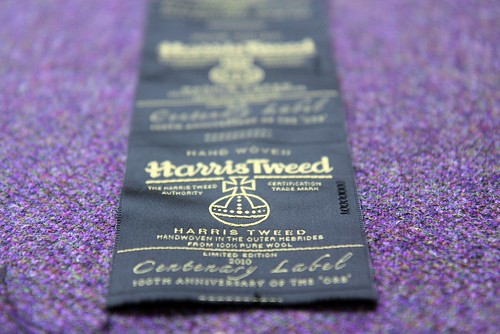
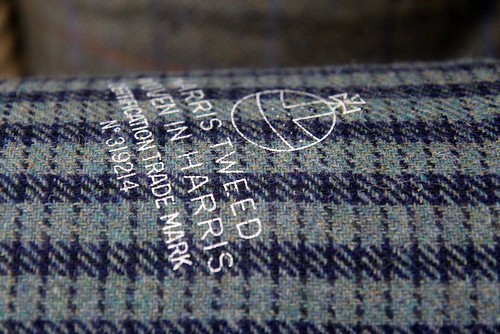
The Harris Tweed Centenary Label. Celebrating one hundred years of the Orb. 

Before I offer an abundance of 'factory porn' and talk you through the processes of what makes Harris Tweed so special, I have to acquaint you with the brand and give you a little background. It is arguably the most famous textile in the world. It is certainly the only cloth that is protected by an act of parliament. The Harris Tweed Authority took over from the Harris Tweed Association in 1993 by Act of Parliament. Thus the definition of Harris Tweed became statutory and forever tied the cloth to the Islands. In essence, Harris Tweed means a tweed which has been hand woven by the islanders at their homes in the Outer Hebrides, finished in the islands of Harris, Lewis, North Uist, Benbecula, South Uist and Barra (The Outer Hebrides) and made from pure virgin wool dyed and spun in the Outer Hebrides. Only cloth that fully conforms to this definition is entitled to bear the world famous “Orb” trademark which was granted to the islanders in 1910.

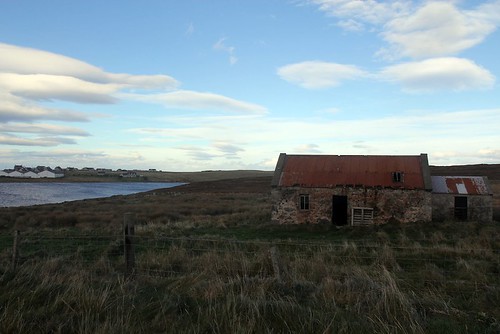
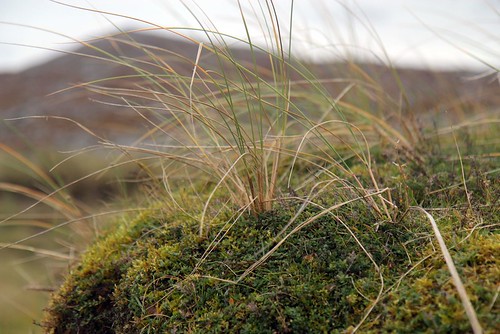
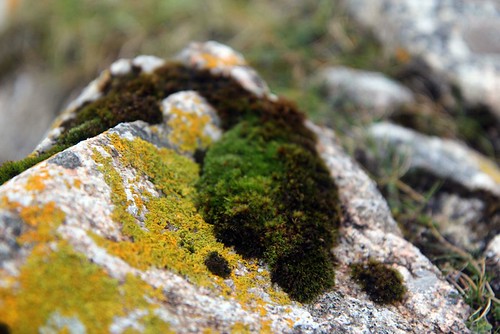
For such a burly and utilitarian fabric, Harris Tweed evokes an a great deal of romantically nostalgic feelings and the BBC4 series certainly captured this notion. The reason being is that the tweed is still woven by pedal-powered looms in the homes of Scottish sheep herders on the outermost fringe of the British Isles, just as it has been since 1846. Over the decades, the process has certainly evolved but it has always remained true to the basic principles which are enshrined, uniquely, in the Act. Today, Harris Tweed is the only handwoven fabric produced in commercial quantities. It once hung in every British wardrobe but with the rise of throwaway fashion all of that sadly stopped. If ever there was a time to wrap ourselves up in this beautiful, sustainable, ethnic British cloth it is now. One of the reasons that make this fabric so special to me is that its relationship with the setting in which it is made. The fabric and landscape are entwined. The myriad of Harris Tweed patterns are inspired by the ever changing landscape...  

The beautiful, ever changing landscape inspires the famous cloth.

In a previous post, I discussed how 2010 was make or break time for Harris Tweed. It is one of the most iconic fabrics in the world yet, as the Tweed series documented (if you missed it, it is available over on Vimeo) the outlook for the fabric was similar to the weather forecast for the Outer Hebrides in Winter, not all that sunny and bright. The BB4 series looked at the island industry in decline. With the closing of its largest mill, it was crunch time for the business. The story weaved of the British Isles most notable native cloth was both wonderful and frustrating. Thankfully, since the series ended there has been something of a revival and recovery shoots were now visible through the landscape hinting of a great green future. As the outside world is cottoning on, mood on the island has radically shifted and the weavers are busy. Life on the island is so much better and with Macualey as our guide, we saw the revival firsthand.

Following a tasty breakfast including the famous Stornoway black pudding, our whirlwind day began with a with a visit to Harris Tweed Hebrides, the award-winning company based at Shawbost on the west coast of the Isle of Lewis. The mill now accounts for more than 90 per cent of Harris Tweed production. The company was named Textile Brand of the Year 2009 at the Vogue.com Scottish Fashion Awards and given the major accolade for Outstanding Contribution at the 2009 Scottish Style Awards. The mill use a range of more than one hundred yarns which can be made up into thousands of patterns by our highly skilled workforce. They represent generations of experience in this craft industry and it was a pleasure to see them in action.

Visiting the largest mill, Harris Tweed Hebrides

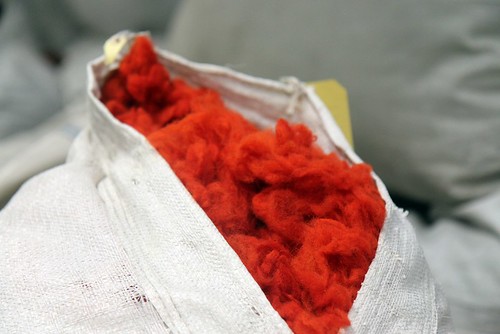
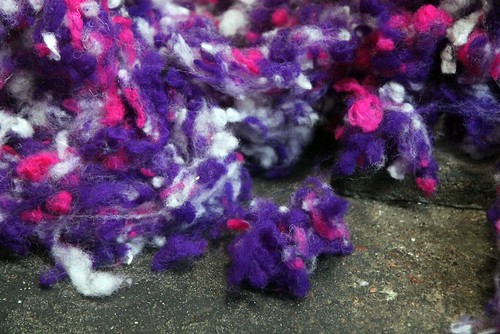
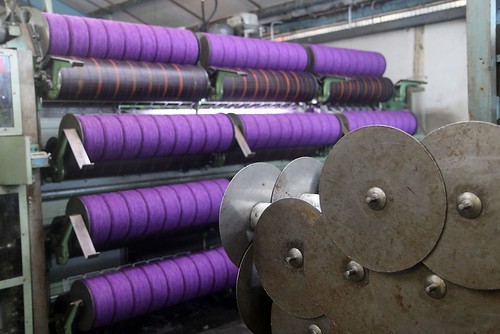
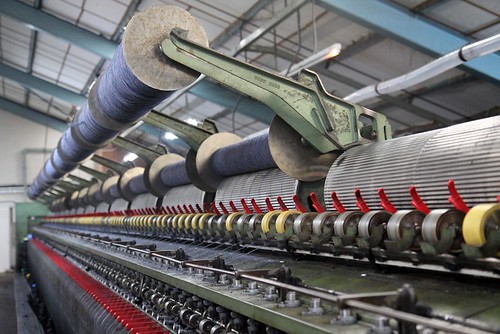
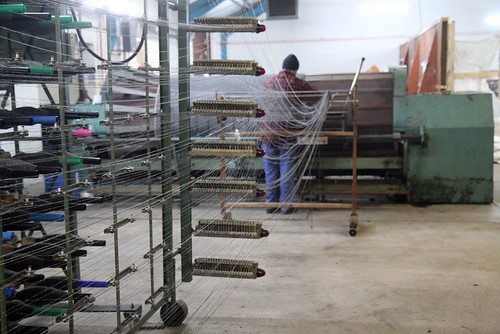
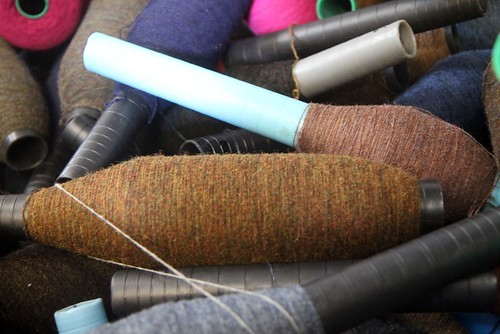
The Harris Tweed story begins with pure virgin wools which are blended together to gain the advantages of their unique qualities and characteristics. Although most of the wool is grown principally on the Scottish mainland, in the early summer the island communities join together to round up and shear the local sheep which are dotted throughout the landscape. Once sheared the wool is taken to the factories of the main tweed producers where is is washed and then dyed. The coloured and white wools are weighed in predetermined proportions and then thoroughly blended then carded. The resultant yarn has a twist imparted to it as it is spun to give it maximum strength. The spun yarn is then warped. The warping process is vitally important process where the basic pattern is prepared by winding the threads to ensure an even tension throughout. The warp is then gathered in long hanks...

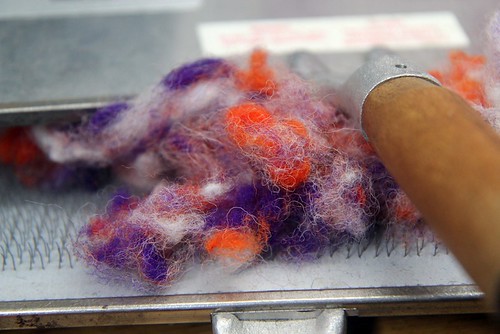
Documenting the initial mill processes. From raw material to processing and warping.

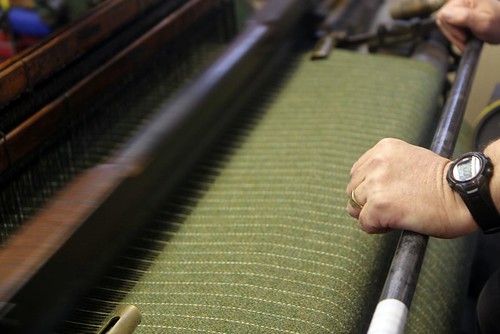
The warp is then delivered or collected, together with yarn for the weft, to the weavers. As described above, all Harris Tweed is hand woven on a treadle loom at each weaver's home. The relationship between the mill and the weaver is central to the production of Harris Tweed. Now, there are approximately one hundred and twenty active weavers but few are as famous or as well respected as Donald John MacKay. Don John is an independent weaver and has been at the forefront of the Harris Tweed revival in his far flung, remote outpost. He buys the yarns off a mill to fulfil his own tweed orders as opposed to being contracted by a mill to weave the cloth for them. Don John can work independently and create a business for himself as opposed to many other weavers who rely on the mills to get them business. In this sense, Harris Tweed is truly a subversive cloth as it is made by workers who own the means of production and produce in defiance of the global manufacturing trend. When the tweed enthusiast Patrick Grant of Nortons and Sons requires the fabric he turns to Don John.

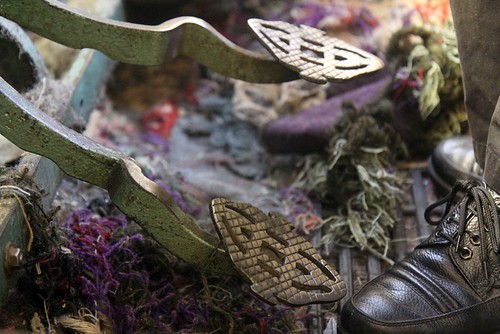
Back in September 2004, MacKay and his wife, Maureen, were approached by the Harris Tweed Association on behalf of the sportswear giant Nike to produce a couple of metres of cloth. The duly sent a few samples of work to Nike's American headquarters and it soon snow balled in to the first full collaboration between the parties. Six years on and Nike have once again turned to the respected craftsman and we were invited in to the cramped confines of his eighteen foot by fourteen foot shed on the picturesque island of Harris. It is remarkable to see a multi national company like Nike work so closely with a single craftsmen. It is this dichotomy which makes this collaboration so covetable... 

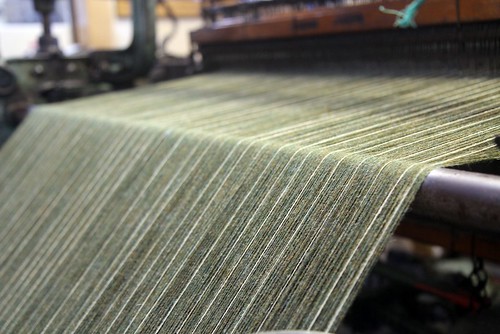
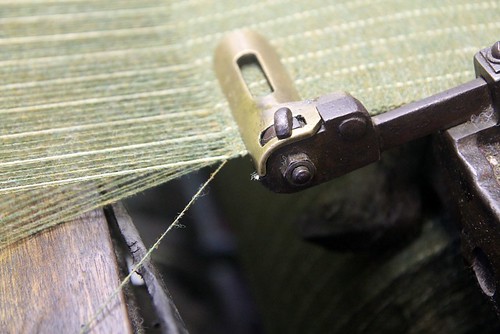
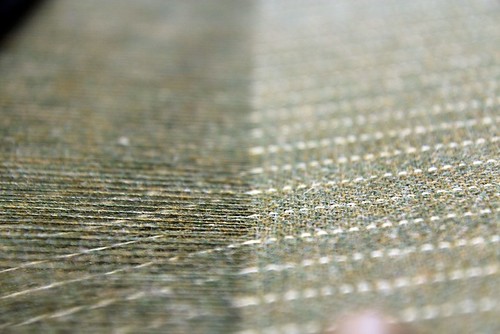
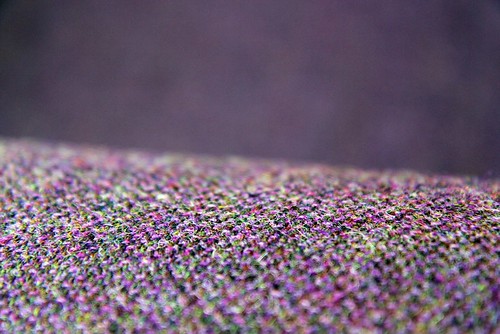
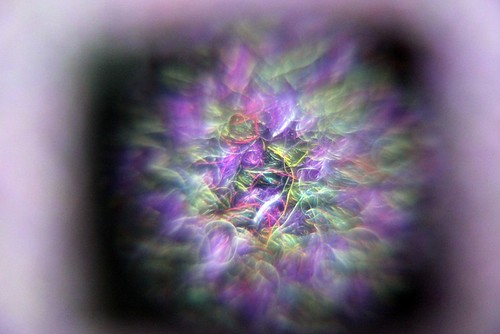
Exploring Don John's intimate space and chronicling the weaving process on his pedal powered single loom. The final image which shows a magnified look at the cloth really captures the beauty of my tweed.

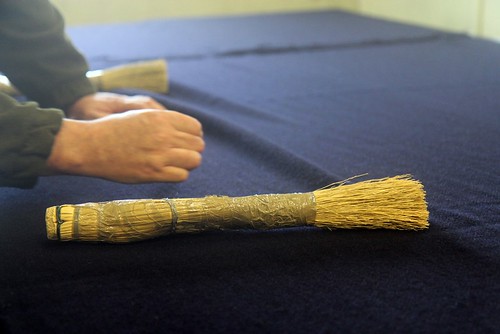
The tweed returns to the mill in its 'greasy state' and here it is finished. Dirt, oil and other impurities are removed by washing. The tweed then passes through the nimble and skilled hands of of the mending department where any loose ends and broken threads are rectified. This stage is an essential quality control activity and ensures that there are no imperfections. Various finishes can then be applied to the tweed. The final process is the examination by the independent Harris Tweed Authority, before application of the famous “Orb” trademark which is ironed on to the fabric as the ultimate seal of approval.

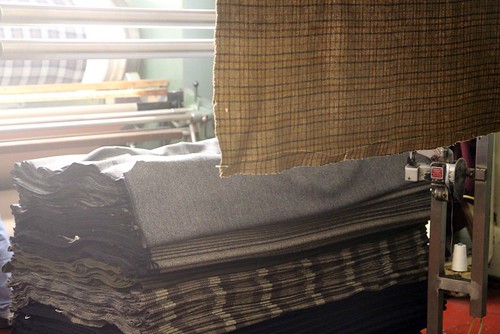
The finishing guarantees the utmost quality before the official stamp is ironed on.

Throughout the day, it was a pleasure to be able to show the finished shoe (that we were generously gifted) to the individuals who had helped make them. Both the mill workers and Don John gave the finished article their enthusiastic thumbs up. Each loved the finished design and were so pleased by the prominent Harris Tweed branding. The fruits of this collaboration, the Nike Sportswear x Harris Tweed Air Royalty Vac Tech shoes are of course now available from Offspring, 1948 and NikeTown London. The shoe features the trademark Harris Tweed material on the upper paired with a premium brown leather toe box and heel giving a quintessentially modern British look. The Swoosh is subtly hidden within the luxury cloth now appearing embossed and the tongue carries the signature Harris Tweed logo replacing the traditional Nike Sportswear logo. Adding to the design are tweed rope laces to give an outdoor inspired feel. They cost £75 only a limited run is available, so be quick if you fall for their charms.

Now, we couldn't resist braving the elements to take a few outfit shots in the beautiful setting. Despite the with bracing cold winds we had a lot of fun posing in front of the stunning environment. From the Callanish Stones (which we were told are actually older than Stone Henge) to the beaches of Harris we explored it all...

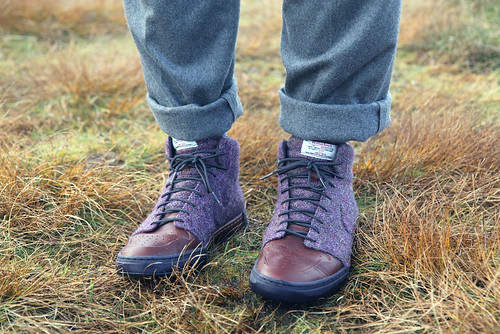
Braving the coastal chill in Stornoway. Nike Sportswear x Harris Tweed Air Royalty Vac Tech worn with Creep by Hiroshi Awai shirt, wool trousers from Uniqlo and crombie by ASOS.
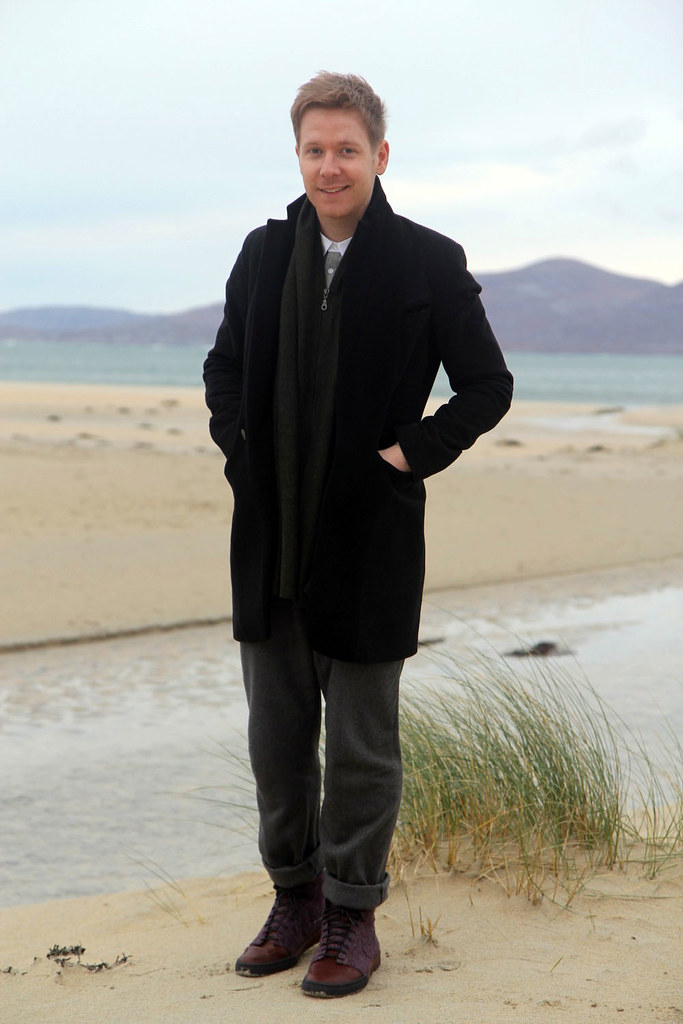
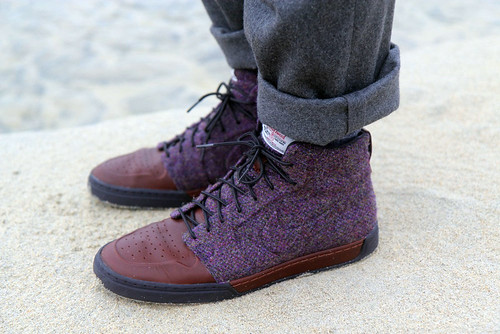
The beautiful beach of Harris. Nike Sportswear x Harris Tweed Air Royalty Vac Tech worn with Creep by Hiroshi Awai shirt, wool zip scarf by Braille, wool trousers from Uniqlo and Crombie coat by ASOS.
______________________

I hope the post demonstrates that at the very heart of Harris Tweed, there is an ability to combine centuries of tradition and heritage with creativity and a defiant sense of individuality. Hopefully the images capture the wonders of this cloth and the setting that is so integral to it. Having only returned on Monday night, I still long to go back. The glorious landscape and fabric are undeniably interwoven. Hopefully we will see an infestation of the flights that leave Edinburgh and Glasgow so that people can explore the scenes. It is breathtakingly beautiful – on Harris in the summer, turquoise waves lap on empty white beaches. Go in autumn or spring and you’ll never want to leave, and being there forces you to want some of it on your back. I’ve never come across another fabric that I lust after. It is wonderfully unique and this collaboration celebrates it so well. Here's hoping that this is just the beginning of a new era of Harris Tweed.

Tuesday, 9 November 2010

Style Salvage Speaks to... Kuni Awai

Style Salvage Speaks to... Kuni Awai.

The b brand is one that always strives to offer a modern and accessible concept, cohesive throughout the store and in its eponymous magazine, clothing and shoe collections. Last Friday when we caught up with the creative minds behind b magazine, they discussed how exciting and vibrant the b world was and how much it influenced each issue. With each visit to this mecca of contemporary design this regular shopper is left with a new discovery or idea to pursue. From the designers the stock to the people who shop there or those involved in the store in some way, it is clear that it is more a lifestyle than a store. Everything from the clothes hanging on the rails to the artwork displayed within it to the people which inhabit it, b is full of surprises. I encountered one such surprise back in February at the brand's AW10 presentation courtesy of Kuni Awai's accessories.

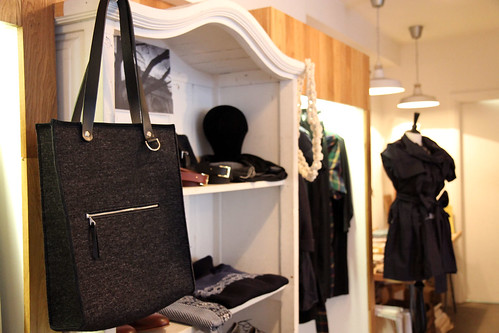
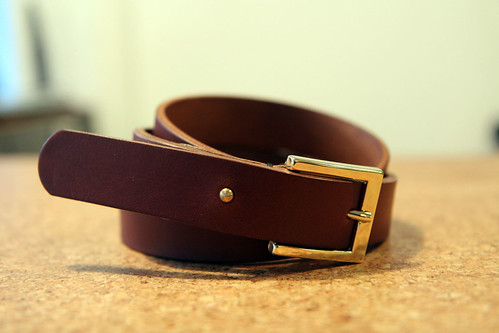
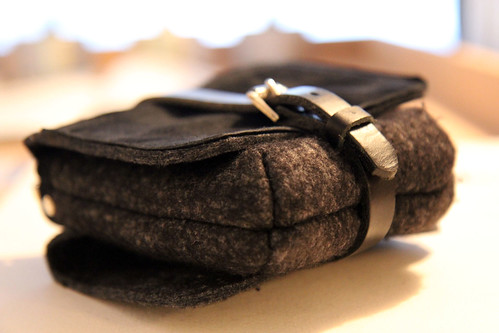
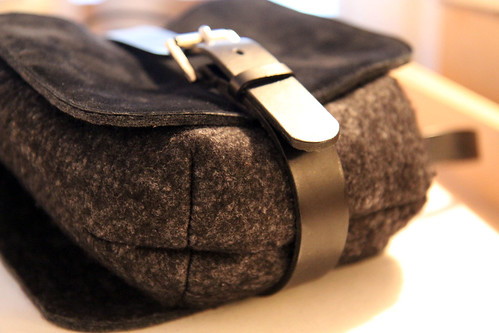
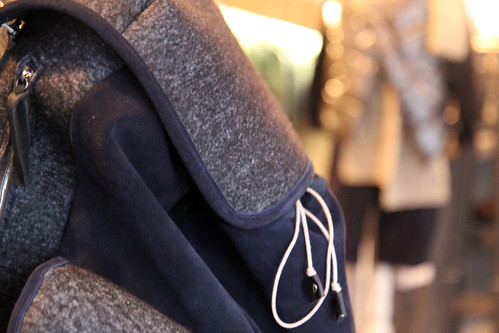
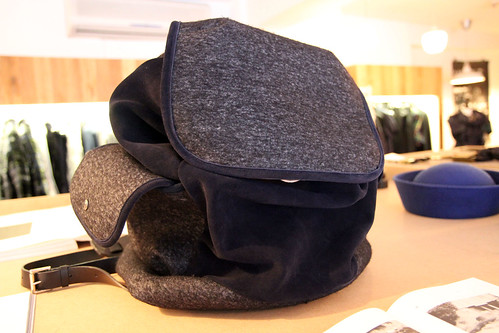
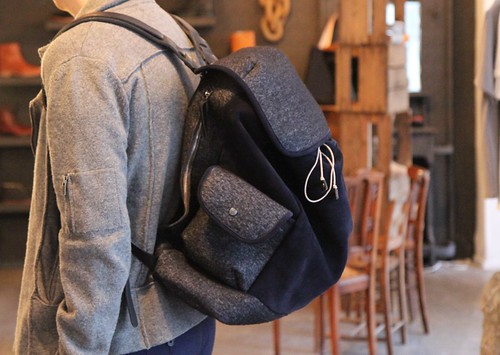
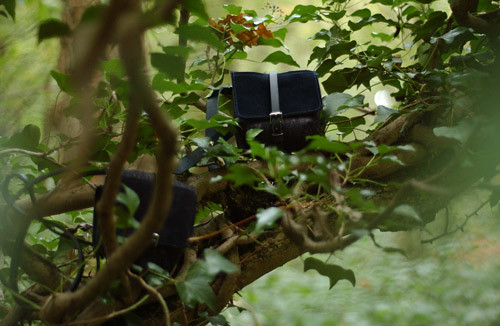
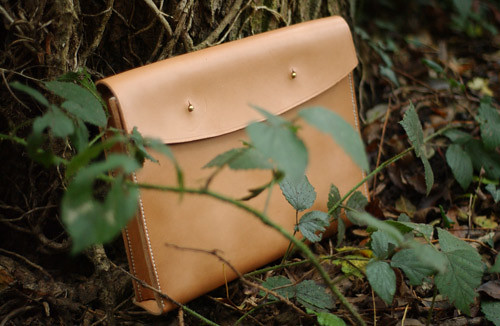
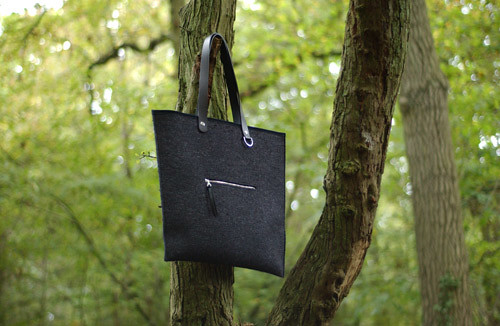
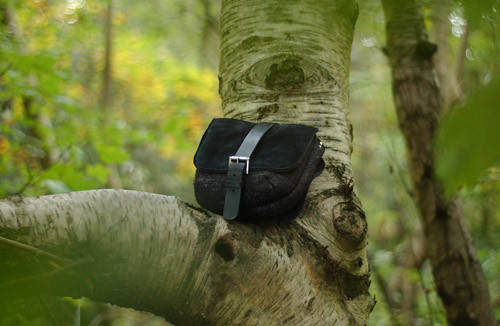
Cast your mind back to last season's fashion month, the Tom Finch designed wooden landscape combined beautifully with the jaded aristocrats wardrobe and made this city loving boy want to dress up and explore the great outdoors. In addition to the plaid suit, a beautiful backpack in thick felt and suede captured my attention and to this day, I long to add it to my ever growing collection. I was fortunate enough to grab a few words with Matthew Murphy at the presentation and he informed me that the accessories had been created by a familiar store face, Kuni Awai. Awai has been part of the b family for four years and in SS10, she began adding wonderfully crafted accessories to the collections and ultimately the shop floor. For AW10, in addition to the breathtaking backpack the range includes bumbags, totes, shoulder bags and a cardholder. The moment the stock arrived in store, I just had to feature the designs in more detail (any excuse to see the backpack again). So, armed with my camera I ventured to the store to learn more about the craftswoman behind the range...


SS: What were your inspirations, dreams and the driving catalyst for launching in to the world of accessories?
Kuni Awai: My craft is a way for me to communicate with the world, it’s not been a dream so much as a passion. I love working with natural materials, creating sculptural objects using traditional techniques. I am very fortunate that I’ve met so many lovely people who’ve taught me about craftsmanship over the years and in that sense I remain a student, someone that is always open to learning. I would never have dreamed that I might have my own label in a million years, my friends, colleagues and mentors influence has led me to where I am now.


SS: Collaboration with creative talent is an integral part of the bstore brand identity, what is your background in accessories design and how have the team encouraged and supported you in your efforts?
Kuni Awai: My background is in shoemaking, having studied at Cordwainers in London. I went on to serve as an apprentice to a bespoke shoemaker, then having worked at b Store for a while in the shop we identified the need to stock more accessories and it was a this point that I was first given the opportunity to make leather belts. I went on, in 2009, to make a range of bags in collaboration with Jason Hughes, b Store's creative director for the Spring Summer catwalk show. Both Matthew and Kirk have always been very supportive and encouraging - there could not be the AWAI brand without them!!


SS: What were the first and last item you remember designing?
Kuni Awai: My earliest memories of designing are a three-dimensional card for a friend when I was perhaps 5 or 6 years old and around the same time a wooden puzzle I made in my grandfather's workshop (he designed and built boats) in Japan. It could be that this is where my love of natural materials, wood, leather and paper have developed from.

The most recent projects I've been working on are designs for origami gift-wrapping for Dunhill (if you have a chance to visit Bourdon House, you will see Japanese style wrapped boxes there)


SS: As all of your designs are expertly handmade in London, craft and local manufacture are obviously very important to you. Can you talk us through some of the process involved in creating your accessories? What can you tell us about the workshop?
Kuni Awai: I mostly work alone, working by hand and without the aid of machines. For example, all finishing and the straps are hand sewn on the rucksack. But an exception would be the felt bags which were machine stitched by someone else.

The first stage is a sketched design on paper before I go on to think about construction and measurements and then sampling. Sometime I start making things earlier on but most of the items come together more fully in the sampling process.

It is very important for me to source and produce everything in the UK, giving me more control and a closer relationship with the end product.


SS: b Store's AW10 collection took inspiration from the great outdoors. It explored the idea of a jaded aristocrat exploring his country estate whilst he and his family dress accordingly for each conceivable occasion, from rambling attire to full on evening dandy with a two piece plaid suit. Your accessories compliment the collection extremely well. How closely did you work with Matthew, Kirk and Jason when designing the collection?
Kuni Awai: The guys talk through the concepts of each collection at an early stage, discussing inspiration and themes. It has been always a close collaborative relationship, including of course direction from Jason and Natasha.

For AW10 they gave direction for the presentation from a styling point of view, to consider rucksacks with a mountaineering look and bumbags for hunting in the woods for example. The choice of the materials was to compliment/associate with the footwear, in a similar way people in countryside might dress. For the women, the card case necklace match with the evening shoes, and the men's rucksack is made in waterproof thick felts.


SS: Even though the presentation was back in February I still have a strong image of the backpack and can't wait to see it in store. I know that this is a difficult question but do you have any favourite designs? 
Kuni Awai: The rucksack, as this this is the most time consuming to make and therefore it is very satisfying to finish!


SS: Your designs are currently available at bstore but will soon be available on Lambs Conduit street thanks to the lovely Darkroom. How did you meet Rhonda and Lulu? Is the buy different to bstore? Kuni Awai: I first met Rhonda and Lulu as friends of Matthew and Kirk and as customers of B Store. They first noticed my bags at the b Store showroom in Paris and contacted me to work on a range for their shop. For Darkroom I've made variations on some of the products in the range created for b Store, adjusting the size and colours to better suit their customers. Yes, big thanks to the Darkroom girls, I was kind of shocked (and happy) how quickly they ordered after I visited them!


SS: How would you like to see the Awai brand evolve in the coming seasons? Kuni Awai: Although next season I've taken a break to focus on the brand's direction, I can tell you that I'm working on a collection tailored to the requirements of each of the stores that I presently work with. These designs are predominantly made out of soft and saddle leathers - the materials I feel most passionate about.
________________

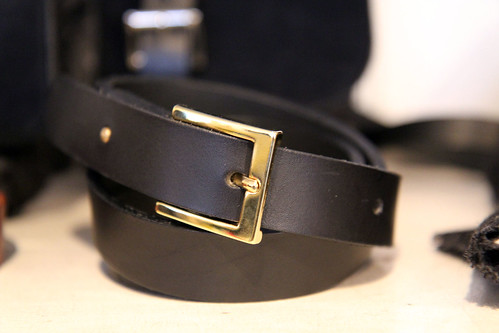
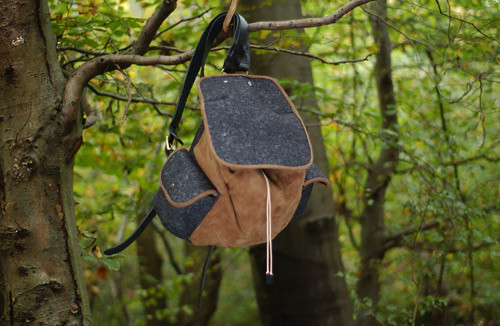
I'm looking forward to watch the brand develop over the coming seasons and am already looking to add Awai's designs to my accessories arsenal (I've already purchased the black leather belt). In addition to taking the talking us through the evolution of her brand, Awai offered an exclusive look at her recently shot look book which I can happily share with you. If you go down to the woods today, you're sure of a big surprise...


Look Book images courtesy of Kuni Awai.

Sunday, 7 November 2010

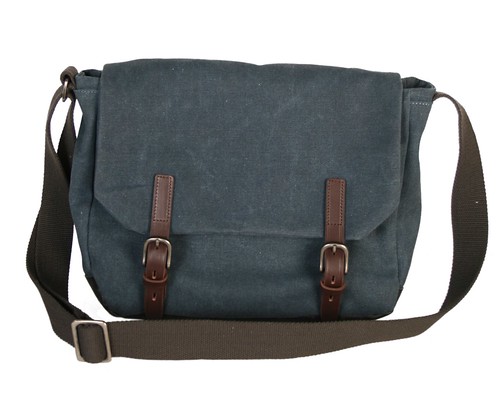
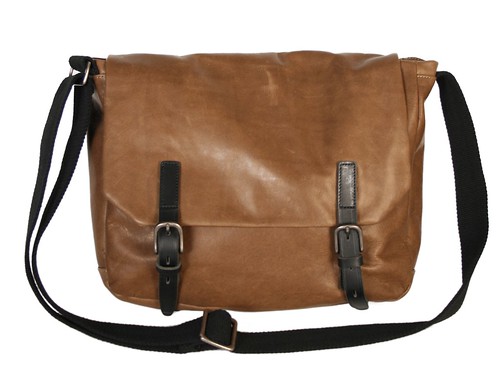
Ally Capellino for Apple ipad satchel

Practical, tactile, unstructured, casual, wearable and classic are all words that one associates with Ally Capellino. The label has carved out a niche for finely constructed bags for discerning men and women, providing accessories that are both protective and functional without compromising on style. Of course, collaboration has been a key facet of the recent development of the label. In 2006, Capellino created a collection of bags for Margaret Howell, Topshop and the bestselling artist’s set for the Tate Modern Gallery. However, the most intriguing collaboration began in 2008 when the label worked with Apple.

The resulting AO range sees original Ally Capellino bags and sleeves tailor made for the variety of mac products, from leather sleeves for your Air to a dispatch satchel for your pro. Computer bags and laptop sleeves tend only to focus on functionality. There is rarely any subtlety or element of eye catching design to them. Thankfully, Ally Capellino offer an alternative. As Apple create their seemingly ceaseless conveyor belt of covetable gadgets, Capellino adapts and creates beautiful means to carry and protect them. The latest fruits of the collaboration see Ally Capellino create her first ever exclusive Apple iPad satchel. Oh if only I had an ipad. Before the November 22nd launch, we managed to catch up with the designer to hear her thoughts on the latest addition to the range and learn that she'd love to try her hand at furniture design...

Ally Capellino for Apple ipad satchel in navy canvas.

SS: Could you introduce the ipad satchel in your own words...
Ally Capellino: Well in the vein of other computer bags that we have done it aims to keep away from looking like a typical black nylon thing and to have the relaxed and slightly retro feel that we specialise in. I hope that it doesn't shout 'I've got my iPad in here!'

SS: The range manages to feel decidedly classic while being truly innovative and modern at the same time. How did you approach the design process for the satchels?
Ally Capellino: I like the problem solving aspect of working to a brief, I suppose that the design side of it is just in my DNA now and so that leaves the other bit to work on. The market for these things is a bit different to our fashion market and the bags are being bought by some very particular people who want to keep their hardware looking perfect and in a virtually factory condition. It's sometimes a strange mix with our bags which we like to see aging gracefully. We have used some of the colours that have already worked well for the Apple products, ie the khaki, but then added some of the highlight colours that we have been getting a good response from in the main collection - ie orange.

Ally Capellino for Apple ipad satchel in leather.

SS: You first collaborated with Apple back in 2008, how did the collaboration arise and how has the partnership developed since?
Ally Capellino: Well the right person at Ally Capellino managed to get to speak to the right person at Apple Europe at just the right time. They were open to the idea, but it took us a year to come back to them and another six months to get the product right and probably the same again on contracts etc. They are big and American, and we are small and British so it's been an eye opener.

SS: How important is collaboration to the label and who would you love to collaborate with in the future?
Ally Capellino: Well different collaborations bring different benefits, this brings us a new European audience and a stable income(relatively) Our Tate collaboration allows us to get some really starter priced things out to a very varied audience, and then things like the bag that we did with Norse projects has brought us new international customers for our main business. I would love to do something with furniture or interiors as well, as long as the materials are nice and interesting I'll have a go.

Ally Capellino for Apple ipad. Khaki and orange canvas satchel.
Available from November 22nd.

Saturday, 6 November 2010

Schneider Sense


I have to confess that my little brain tends to overload with the seemingly incessant unveiling of designer look books the moment a new season approaches and unfortunately a few slip right by me. Occasionally, there are even a few designers whose work I admire but for one reason or another they fail to make it on to my radar. Stephan Schneider is one such designer. In 1994 German born Schneider graduated top of his class from Royal Academy of Fine Arts in Antwerp and has since established a quiet following. Thankfully, issue three of b magazine firmly reinstates the German born designer on my blogging radar. 


Whenever I've encountered Schneider's designs in b store or in retail outlets across the continent I have noted their good cut and use of stunning fabrics. So, why do I not follow and enthuse over Schneider's every collection? The simple reason is that he is a designer that goes about his business quietly. For the last eight years he has shunned the circus of fashion week, allowing his designs rather than the theatrics of a show to make the required statement. Schneider's collections may not be dramatic but they do contain extraordinary elements. Schneider’s concern is in the detail, attractive to people who want to make less effort when dressing. He designs each fabric himself, while the label has its own production facilities in Belgian factories where pieces are cut by hand and time can be spent on the finest finishing. Schneider is a designer who spends half of his time with the textile and half with the silhouette. Now, I could rattle on but I point you in the direction of Dal Chodha's wonderful designer feature in b magazine. In the meantime, I'd like to share the AW10 look book with you...


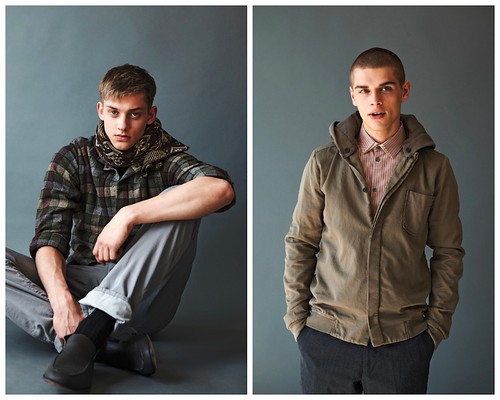
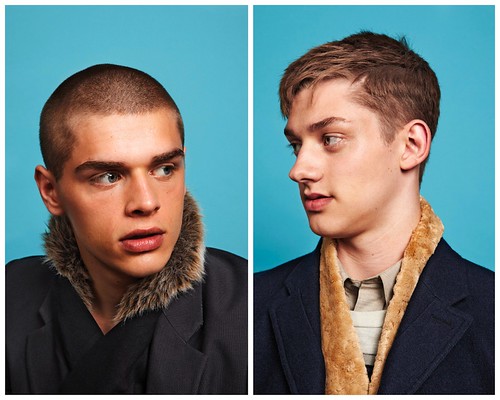
Stefan Heinrichs photographs Nine Daughters and a Stereo for Stephan Schneider’s AW10 lookbook.

The collection embraces relaxed tailoring for wardrobe of essentials. A contemporary reinterpretation of classics. Despite a few key items being adorned with fur, it celebrates an understated and timeless appeal. This might be dressing without drama but it is far from dull. As Schneider has found a new follower in me, I leave you with a few words from the wonderfully intriguing designer...

Thursday, 4 November 2010

Preview of b three

As readers of this blog you should all know by now that London’s b store has long been a mecca for contemporary design. Whilst nurturing some of the best menswear design talent in the capital and beyond, b store have been merging art, fashion and design seamlessly for a number of years now. With each visit to the Savile Row institution, there is the chance to discover a new designer, an exhibition, a magazine or even just a moment when you talk to them and leave with something new. You can always expect to be surprised when you visit the store. Though undeniably a stylish haunt, it has always been more than just a physical space and has certainly offered more than mere fashion. It was therefore, a natural evolution of the brand to venture in to print and thankfully b magazine reflects the energy of the brand beautifully. We have been fans the moment our eager hands grasped the first issue back in September 2009. Created by b clothing’s Creative Director Jason Hughes and Editor Dal Chodha, the magazine exposes the wider b Store ethos; passion in design and integrity in individuality with a knowing nod to more sartorial affairs.

It sells ideas and it sells information. Editorially driven, b magazine looks at creatives from a wonderfully unique angle. The world it weaves through and explores means that this is a publication that is nigh on impossible to put down. It concerns itself with what they are reading, rather than what they are wearing and worries more about familiarity than fantasy. To mark the imminent release of the issue three (Monday 8th November) which includes insightful pieces on BLESS and Stephan Schneider, we caught up with both of its creators to discuss the issue over a cup of coffee and a cinnamon bun. What follows is our meandering conversation and a sneak peek inside the issue...

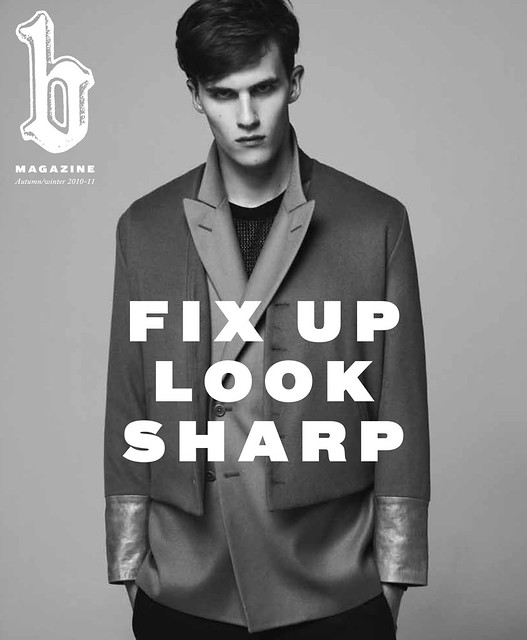
The cover of issue three.

SS: The magazine feels like a natural evolution of the b brand on to printed paper as it exposes the wider b-Store ethos. What were your inspirations, your dreams and the driving catalyst behind b magazine?
Jason Hughes: I've been working with both Matthew (Murphy) and Kirk (Beattie) from the very first collection and even before that point I worked with Carola Euler who was stocked at the store, so I've known the store and the guys for some time now. We had a very casual conversation about the magazine with them, Dal and myself were clear that there were certain things that we wanted to do and certain things that we didn't want to do. Primarily, we did not want it to be another fashion title because we both felt that there already were enough titles out there, some of which were doing it very well, some doing it not so well. It was very important to us that we were crating a magazine that came from an alternative point of view to anything already out there. We talked to Matt and Kirk about the store; the designers they stocked, the people who shop there or those involved in the store in some way, be that artists who have shown in store or creatives who they have collaborated with in some way and at this point we realised that this was more than a lifestyle. We described it as a world, the bstore world. This notion was of the main catalysts for the magazine. We were excited by how vibrant the b world was, not just in terms of the label or the clothes but the people which inhabited it. More than that though, this pool was a massive source of content for us.


SS: By the very nature of the store, the magazine is much more than an in store publication...
Dal Chodha: In a way it felt like an untapped pool of content. Such amazing people that come in either to shop or interact with it in some capacity.
Jason Hughes: Hopefully the magazine reflects the energy of the store. You can always expect to be surprised when you visit the store, there is going to a new designers, exhibition, magazine in the book corner or even just a moment when you talk to them. The store has always been about the new and I've always admired it for that. Matt and Kirk have always put themselves out there to discover a new designer and to support them, some of whom they have continued to support and some might have fallen off but they've always had a strong relationship with them and grown with them. I've always admired their ability to discover and nurture and this certainly fed in to the publication. At no point did we want this to be an in store magazine but rather, we have always wanted to create a lifestyle publication. Welcome to our world, it is an exciting place.

Unclassified. Welcome to the world of BLESS. Words by Ben Purdue, photography by Franck Sauvaire with Jane Howard as fashion editor.
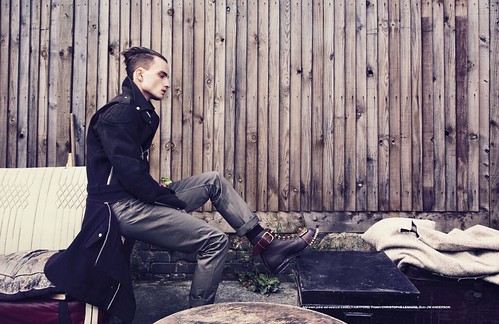
SS: What was the starting point for the third issue? How did it evolve?
Dal Chodha: It is important for us to offer something that our readers cannot get anywhere else. The research aspect for each issue is the hardest part because we discuss topics that you can only know if you have a personal relationship with the people involved. For example, with regard to the collectors feature in this issue there is no way that your average pr would have that type of information. There is a natural progression from the last issue. We discussed the last issue and ideas on where we would like to take it, areas that we'd like to explore and expand on and this is particularly true within the articles.
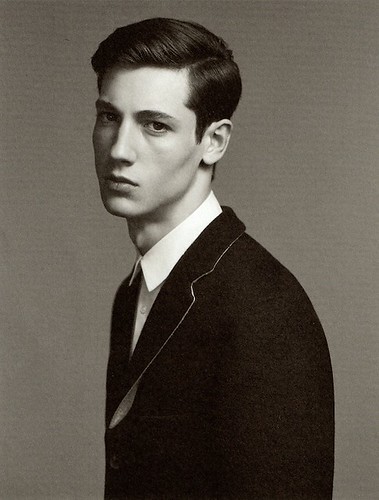
Jason Hughes: We tend to have a lot of ideas and there is only a certain you can actually cover in one issue without it becoming repetitive.
Dal Chodha: We are friends as well, so outside of the magazine we share a great deal. We both have folders on our desktops as all of us do of ideas that have captured our imagination so when we meet we both discuss what we have found. For me, my main focus in the features is to talk about people that haven't been exposed in the way they deserve.

B for Baracuta. The SS11 collaboration is previewed. Words by Dal Chodha, Photography by Laurence Ellis with Jason Hughes as Fashion Editor.

SS: I have really enjoyed the recent designer features, Chrishophe Lemaire in the last issue and now Stephan Schneider. These are names people might be familiar with but your features bring them to life. I have to confess that I knew very little about Christophe before his stunning AW09 collection, that collection really made me take notice of his work. So your feature was extremely well timed...
Dal Chodha: Exactly, we've taken this ethos from bstore really. To highlight brands that people in the know, know about but our job is to promote them in a way that is fitting of their talents. We want to take them and elevate them as much as we can. Christophe's work for example is amazing but not enough people know about him or his work.

Stephan Schneider. In conversation with. Words by Dal Chodha and photography by Stefan Heinrichs.

SS: I found it interesting to observe the knock on effect of your feature on Christophe Lemaire. Quite a few publications and websites featured him following your issue launch. He was now on the radar, of course his appointment of Hermes magnified this even further...
Jason Hughes: The Hermes appointment was amazing timing really. We knew nothing about it at the time, neither did Matt.
Dal: It was announced three weeks after I met him in Paris. Of course he would have known but it wasn't mentioned during the course of our discussion.
Jason Hughes: It was really interesting when Tim featured him on style.com and did a review of the show. I think that was partly because of the last issue as well. For us, it felt like the right time to introduce him to a wider circle.
Dal: Both Christophe and Stephan have been in the industry for many, many years and that for us, is an important aspect of fashion. It is, after all a business as well as being inspirational. These guys have built solid foundations for selling clothes.
Jason Hughes: The designers that we feature and shoot are ones that tend not to tackle ephemeral trends and both Christophe and Stephan have certainly shied away from this aspect of fashion. They are much more interested in creating a highly distinct style and in cultivating collection upon collection.

The Collectors. b meets four collectors and discovers the UK's largest collection of vintage Hawaiian ukuleles along the way. Words by Dal Chodha and photography by Clare Shilland.

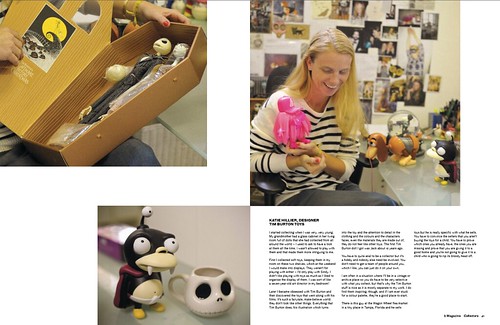
SS: Within the issue you introduce four collectors and their carefully curated obsessions, including Fraser Moss' vinyl and Katie Hillier's Tim Burton toys. Are either of you collectors?
Jason Hughes: Only obvious things but nothing that specific.
Dal Chodha: Me neither but I think that is what attracted us to this feature even more. It really was a nightmare to research because people kept coming back with "I collect magazines and these inspire my collection' but we wanted to go deeper and unearth a selection of unusual collections.
Jason Hughes: I've always been interested in people that have obsessions. The feature actually began when we had a discussion about fans, from fans of bands to Japanese girls who hoard Chanel bags, this then evolved in to people who obsessively collect things. it is amazing to love something so much. I think Katie's obsession with Tim Burton toys is the most fascinating, she even talks about how the toys inspire her and when she is stuck for a colour palette she goes to her toys, for me that is just genius.
Dal Chodha: These types of features are always so intimate and enjoyable to work on. Clare (Shilland) and I went to each of their houses and you can't help but become enamored with their collections. These people tend not to be asked about these passions.
Jason Hughes: I've always liked the feeling of when you think you know somebody but then discover what is behind that. It is always very interesting, what is behind this hardcore fashion person.

Furniture. Meet the future of furniture design. Words by Lewis Chong and photography by Retts Wood.

SS: Looking back over the issue now, is the collectors feature your highlight?
Jason Hughes: Actually, I really enjoyed the furniture article. For both of us it is a real highlight of the issue and it was borne out of a conversation with Matt, both of us are interested in furniture design, and we began this quest to find the new furniture designers. It was a lengthy process that went on for months but we are so pleased with the results.

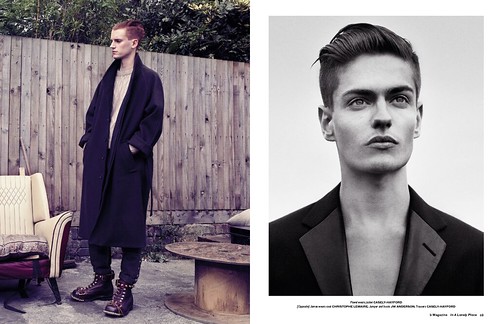
In A Lonely Place. Photography by Nicholai Fischer with Jason Hughes as Fashion Editor.

SS: Despite my obvious love of digital media, I have enjoyed a love affair with printed fashion journalism for many years. What were the magazines that you just had to buy each month, quarterly or biannually? Are there any today that still excite and inspire you?
Jason Hughes: Funnily enough, if I were to be obsessive about anything it would be with magazines. I grew up in the 90s idolising magazines like iD and The Face. I'm from a small village in Wales and these magazines acted as escapism but they also informed me and opened my eyes to lots of things. Some of that has had a lasting legacy on me. There was a point in time when they were barometeres of style but times have changed. Now, I like lots of smaller, independent magazines, similar to those that Matt likes actually. The ones that have a distinct personality and are quite niche, obsessive about their subject matter. Aparamento is a great example, so inspiring. The layout is interesting, the people thy feature and their whole perspective of the home is very interesting. It is an antidote to Homes & Garden. I also love 032c, it is one of the only magazines that has been able to successfully merge disciplines of art, design and fashion.
Dal Chodha: I have quite a romantic vision of magazines. I like having to sit and stop and taking time out and magazines should slow people down. I'm not particularly loyal to any title.
Jason Hughes: It is important for me that there is something to read in the magazine, it isn't just a . There should be well written features that are informative and exciting to read. There has to be a balance.

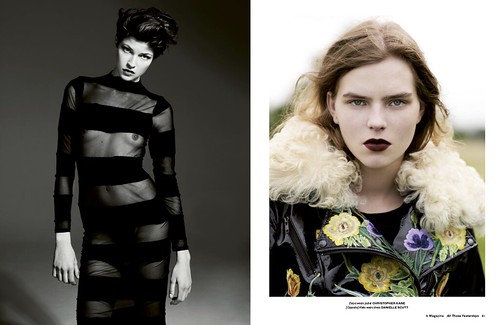
All Those Yester Days. Photography by Willem Jaspert and Sam Ranger as Fashion Editor.


SS: There is certainly that balance in b. How do you see the publication developing in the issues ahead?
Dal Chodha: Thank you. We are really pleased with the balance and we will continue along the same path in future issues. We always have so many feature ideas but for us it important not to overload the reader with information. A magazine should be able to be consumed relatively easily, we just want to create something that can be enjoyed and kept for reference.

In A Lonely Place. Photography by Nicholai Fischer with Jason Hughes as Fashion Editor. .
_____________

In the tricky world of magazine publishing, b Magazine offers a welcome antidote to the over saturation of information on the market, which has led to a dilution of intelligent and informed journalism. It challenges the way we consume, interspersing inspired wisdom with intuitive photography within the traditional format of a fashion and lifestyle title. I'm without doubt that your coffee table or book shelf will be a better place with the addition of this publication so please do pick up a copy next week.

Tuesday, 2 November 2010

Simons as a man for all seasons

"When I think about menswear and its universe the person that makes me think far beyond what is possible and what can be made possible is Raf Simons of whom you left out in your post. His training and his discipline alone has really carried out this lucid path for younger designers such as Ervell to make their own niche and success."

Following my last post on the Patrik Ervell feature in the latest issue of Man About Town, Mike H, a new commenter, left the above paragraph. I could not agree more. Funnily enough, even before this comment had been left I had begun drafting a post on Raf Simons. Once again I had been inspired by a thought provoking feature in Life's a Beach - The Winter Sun Issue. A Man For All Seasons celebrates one of the most influential designers.

There has never been a bad Raf Simons collection. Merely quite good ones, very good ones and a few that have set new standards in modern fashion. He is quite simply one of the great innovators. As a designer, Simons' clothes are instantly recognisable by their uncompromising modern edge which seems him blend his admiration for the underground European pop culture of the 70s and 80s with his quest to define the times we live in.  There is much that makes Simons unique but it his ability to engineer fashion change while never really changing himself. His ideas of youth culture and angst are ever constant regardless of whether he is designing for his eponymous label or under the name of Jil Sander.


As you should all know by now, both of us are interested in the interplay between the social constructs of masculinity with style and menswear. Fashion often challenges the hegemonic ideals and this is no more apparent than in the designs of Raf Simons. Within menswear you can't pull any tricks and Simons concedes that he puts limits on himself because of what society thinks a man should be. Thankfully, Simons personally doesn't know exactly what a man should be. This questioning is precisely why he will tweak and experiment with his design, be that by casting rakish teens to model his collections to spark trends for skinny boy tailoring or exploring how men can adopt more feminine ways of dressing without falling in to the more obvious trap falls.

A Man For All Seasons. Photography by Willy Vanderperre and styling by Olivier Rizzo. All looks from Jil Sander AW10.

Simons is a designer who isn't so interested in designing clothes. That sentence might sound odd at first but all becomes clear when you look through his body of work. Simons is a designer interested in visualising an idea, a concept and an ideology.

Monday, 1 November 2010

Ervell and the balancing act

Having had my love affair with the printed word reignited by the wonderful and inspiring read that was Encens 26, I found myself seduced by the stylish possibilities hiding behind the age defying pose of Pharrell Williams in the latest issue of Man About Town. 'Life’s a beach – the Winter Sun' is the second issue with Paris-based creative consultancy Atelier Franck Durand and editor, Philip Utz at the helm. Despite being distracted by the youthful appearance of the cover star, the two hundred and forty six pages demonstrate that this is a bi-annual to truly covet. The autumn/winter 2010 issue offers a means of escape.

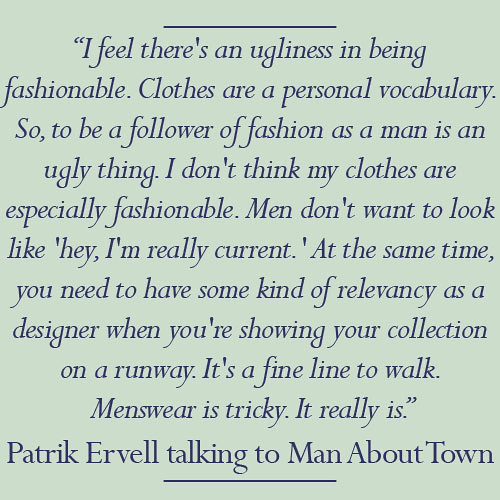
The issue has been mentioned on various blogs over the last couple of weeks but rarely have I read exactly why it was enjoyed. For me, this is a shame and something I'd like to rectify now. The real highlight of the issue is a series of profiles on the current generation of Manhatten based menswear designers who have been slowly but surely laying the groundwork for New York's new school of menswear. Adam Kimmel, Italo Zucchelli, Thom Browne and Patrik Ervell are four of its brightest stars and despite their differing aesthetics all are aware that wearability, durability and commerciability are all integral facets of successful menswear. Each profile prodded and probed the designer quad in terms of their style and business credentials and the twelve page spread was thoroughly insightful read. Having enjoyed each, there was only one that really left me stroking my imaginary beard whilst pondering their thoughts. The following extract from Ervell was of particular interest...


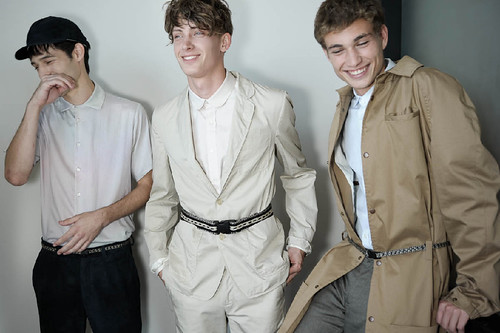
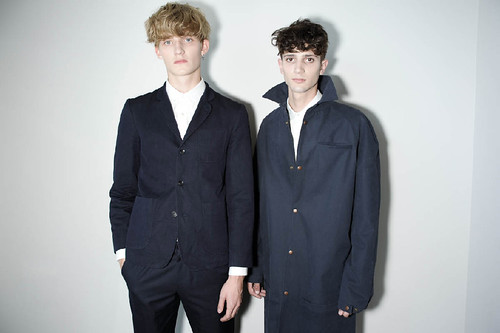
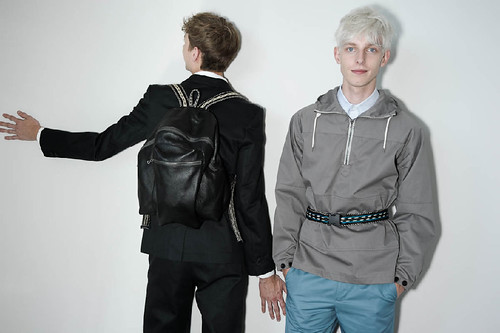
Menswear is tricky. There is a fine balancing act between creating something both exciting and wearable and designing clothes that are covetable on both the catwalk and the street. Menswear could be terrifically dull. Who would be a menswear designer, eh? Well, thankfully Patrik Ervell took up the mantle in 2005 and has since confidently and assuredly made his marl on the industry. For Ervell, the job is one of nuances. Menswear is about details. Not just the details of one garment, but the accumulative effect when you throw them together. He is a designer who creates classic yet forward thinking menswear. In each collection there is always a sense of clean cut minimalism showcased in his simple lines and impeccably sharp tailoring. This signature tends to be fused with an unexpected mix of fabrics. Each season the designer opts to focus on one fabric. Ervell believes that it is in within the realm of outerwear where designers can really push menswear forward and for AW10, the modified Duffel coats in transparent vinyl and the handmade latex rubber raincoats undoubtedly shoved the discipline forward. For SS11 it was horse hair braid. It was used in shoelaces, belting and backpacks. It’s extremely tough, masculine and durable...

SS11 backstage photography by Morgan O'Donovan for Dazed Digital.

The truth is, most men tend to hone in a style for themselves that they stick to for life. Ervell is one of the few designers who recognises this, which is why he makes captivating clothes that are built to last.

LinkWithin

Related Posts with Thumbnails