Wednesday, 10 July 2013

Treasured Items... Hugo Lavin

As Susie dozed in the reclined seat adjacent to me, Varón Magazine was my ever alert and engaging companion for the duration of my flight to Los Angeles. As the rest of the cabin daydreamed of Hollywood, I was engrossed in the monochrome mastery contained within volume six of the handsome title. Simply meaning male in Spanish and only seen through a filter of grayscale, Varón is a complex publication. With editorials that strive for a certain timeless and effortless aesthetic alongside text that encourages the reader to think. With Daniel Whitmore's cover gaze provoking intrigue on the shelves, we asked Varón Magazine's Fashion Director Hugo Lavin to share the tale of his most cherished wardrobe item. Here, the Spanish born, London based fashion spins the yarns behind his favourite sweater. It might not (thankfully, see below) have won him a party prize but it's nevertheless a worthy wool winner...
----------

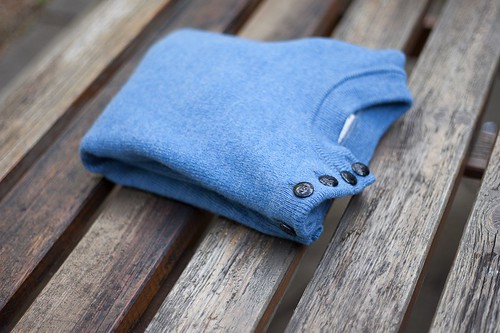
Hugo Lavin and the unknown sailor sweater

HugoLavin_TreasuredItem copy

"I stumbled across this sailor sweater at a charity shop as I searched for a potential prize winning entry for a party themed as 'The ugliest sweater party'. When I saw it it seemed to whisper my name. I instantly fell for its charms and couldn't resist it for three pounds. Obviously I didn't win the ugliest sweater award, as it was the best one on show.

It doesn't have any identifiable branding. It's made of very thick wool and reminds me the of the city where I come from: Santander. Sailor men arrive every morning to the port with this chunky sweatesr and their rain-coat. As a child I developed an obsession with the sea. Also, it reminds me that my adopted city of London and the North of Spain are very similar, so I feel at home.

The sweater itself is quite small but I love this kind of feeling that a garment it's getting small because you're growing up (back in the days to my childhood). This tiny, deep blue sailor wool sweater has probably been alive for a long time but will be continue with its new life with me for many years to come. Here's to a long life for the unknown sailor sweater." Hugo Lavin
----------

Monday, 8 July 2013

Hare Raising

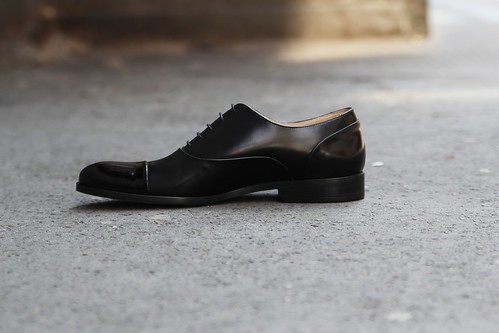
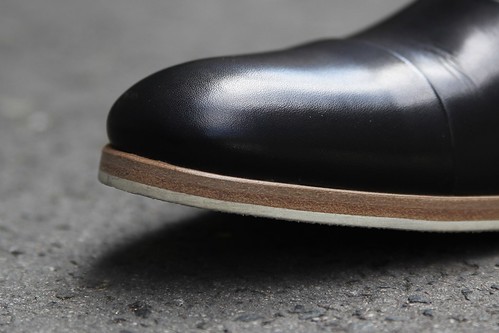
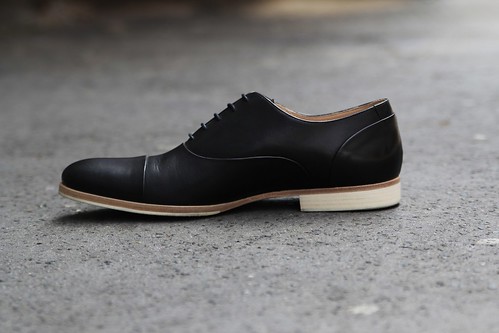
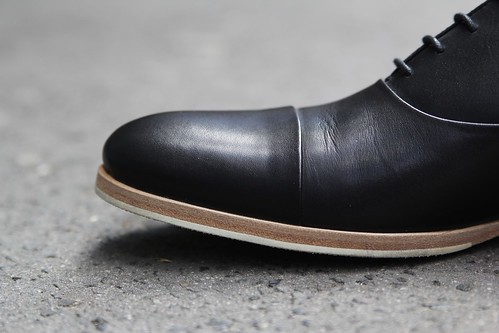
"When I started making shoes I didn’t know the first thing about doing so," Marc Hare begins before taking a sip of wine. As we sit in a quiet corner of an East London bar for an interview feature for Volume 6 of Varon (out on shelves now), we reflect on the whirlwind of success that has continued to fire his footwear label forward. Both the sit down and glass of white are richly deserved. To illustrate the tale behind the evolution of the label we'd like to focus your attention on how the Miller and Orwell have helped define and shape its path. I propose the apt toast of 'He who hares wins' before delving in to the narrative.

Now, Mr. Hare has always a been a work in progress driven by one man's passion and it shows no sign of resting on its well crafted heels. You know the story well. Conceived at a roadside tapas bar in the foothills of the Sierra Nevada Mountains, Andalusia during the summer of 2008, Mr Hare, the brand not the man, was born out of his realisation that there just were not enough shoes in the world that he liked. Thankfully for our feet, he decided to do something about it. From this epiphany it took a mere three hundred and sixty days for his creations to land on the shop floor at Dover Street Market.

"I had nothing to lose when I started the label. The equation was simple, to either build something or sit with nothing. It was an easy decision. I was fortunate because at the time I was thirty seven years old, I had a long history of working in PR, in retail and the commercial side. I had experience in all of the daunting things that people coming out of college face. As I didn't have any other commitments, I was completely and utterly focused on what I was doing and I still am." One step after another, all eyes remain transfixed by Mr. Hare's fancy feet.

"I’ve had to take little steps and learn how to do things and you’ll see that every season we branch out into different little areas." From season to season, there is a constant sense of evolution and at times revolution. One companion from the start, even when Hare was just a man with a dream, was the Miller. The story of this five hold Oxford shoe is the Mr. Hare fairytale. The original Miller began its life sketched in the mind of a frustrated fashion marketeer.

"I worked for a Swedish clothing company who were famous for their skinny tailoring. I had all of their suits but needed a pair of fly black shoes to wear with them. I went to Jerymn Street because I thought I wanted something quite classic but just couldn't find what I had in mind. I wanted something sharper. At the time I didn't know that I'd be the person to fill the gap, but I left the street knowing that such a gap existed. Ultimately The Miller was my answer, a straight forward classic shoe with contemporary lines. It wasn't so stuffy that it had to stick to the rules. A classic Oxford has certain characteristics already so it was all about adjusting them to just how I wanted." Mr. Hare might not have a formal design background but he is a lover, a tweaker, an alchemist.

"I liken the process to mixing your favourite cocktail, you have the recognisable ingredients and then just make it how you want. At the time, there were so many shoes that had massive toe springs and I just found them to be utterly hideous. The toe spring was the thing to be removed, we then elongated it further because I didn't want it to appear stubby in any way and to ensure it was as elegant as it could
be." See a snapshot of the shake-up behind the Miller below.

IMG_3849
IMG_3865
IMG_3871
IMG_3878
IMG_3902
IMG_3889
IMG_3896
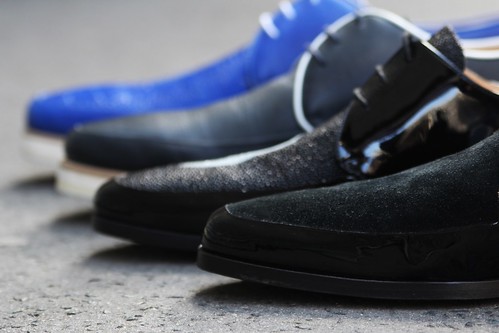
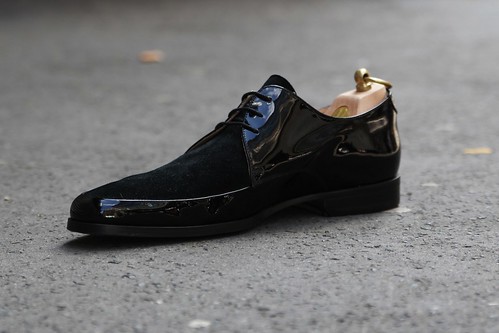
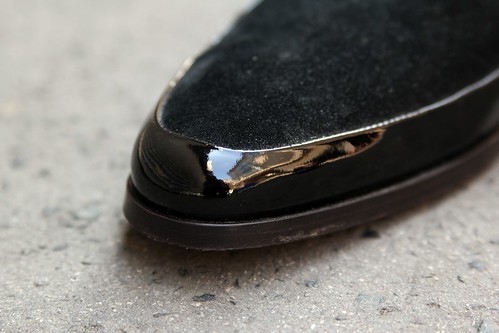
The evolution of the Miller.

As much as I admire the fruits of Mr. Hare's work in constant progress that is the Miller, it is their old friend the Orwell. The Orwell has shape shifted and morphed into a number of label favourites. The handsome family. "Along with the Miller, the Orwell has stood the test of time. Every iteration of the Orwell looks fantastic and it has spawned the King Tubby and the Genet, it has many, many children whilst the Miller is pretty much the original,we've added colours, used different leathers and stiffened up the sole but essentially it is the same shoe." Take a closer look at a few of the famous offspring of the Orwell family album below...

IMG_3783
IMG_3819
IMG_3788
IMG_3842
IMG_3798
IMG_3844
IMG_3795
IMG_3836
IMG_3804
IMG_3828
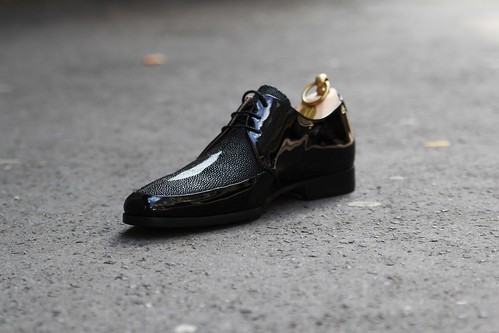
From Orwell to Stingray Orwell to all manner of King Tubby.

Hare is not a man that stands still and once again the Miller, mirrors the man. "It's the shoe that we treat like a Dunk or an Air Force 1, the challenge is coming every season with a fresh, new Miller. The amount of directions that you can take it in and the things that you can do with it is really pleasing. If I cut my whole company down to a one pair, it would have to be the Miller and we'd still have a company that you could run forever and ever and ever."

From daydreams to designs, firsts to the lasts, everything was made in the UK. "Up to that point it was very much a British point of view. For me and it's well documented, England makes the best quality, toughest shoes in the world but at the same time, it's very difficult to go to an English factory as a nobody with an idea and to get it made at the price you need. That's still the case now. So I went to Italy because I could. Now I go to Italy as often as I can. During the sampling process, I'm there every two weeks for about three months. I used to go quite sporadically but now that I've got sales staff and general managers, I can spend longer and hope to have periods where I'm out there full time. Even just six months ago, there was myself and James. Two guys running everything. Just like at the very beginning, where I could just concentrate on the product, now that the infrastructure is there I can concentrate on it again and push it even more. With everything that we've learned, the product that's out in a years time should be next level. Ultimately, my aim is to one day by a factory in Northampton and drag it in to the twenty first century and actually get a truly modern British shoe company going again" Hare's relationships with the master craftsmen of Tuscany are thriving but as ever, he's looking ahead. Out of breath, we'll be trying to keep up with this Hare raising talent and remember.. he who Hares wins.

Saturday, 15 June 2013

The craft of... Bulmer & Lumb

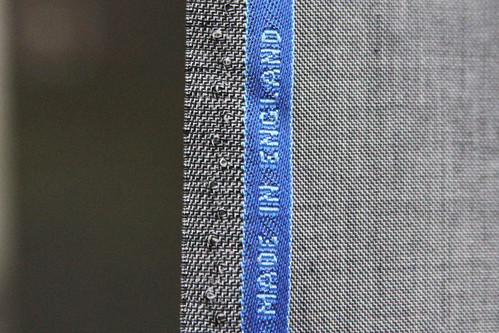
"I get a great rush from seeing someone in the street wearing a garment made from our cloth and  I can actually tell this almost straight away," explains Bulmer and Lumb's Edward Waterhouse. Fine worsted cloth, and its reputation for excellent quality and fine designing is renowned the world over and for a erudite eye like Waterhouse's, it captures the attention. "Textile manufacturing excites me personally due to increased demand from UK retailers and designers to source cloth from the UK again. It is extremely encouraging that brand such as Alfred Dunhill, Richard James and Burberry are looking to source made in England cloth." As the curtain raises once again on London Collections: Men and especially on The English Gentleman at Lord's with The Woolmark Company and blog favourite Lou Dalton, the great rush experienced will become more familiar in its frequency. After a whistle stop tour of West Yorkshire that saw me explore their homes in Bradford and Huddersfield, I'm beginning to feel the rush too.

"Being based in two places in West Yorkshire and employing 70 people in Huddersfield and 130 in Bradford we have a close link with local communities. There is family atmosphere within the company and we have had several generations from the same family working for the Bulmer and Lumb Group, this ranges from a Dye Operative to a Combing Operative to a Weaving Technician.

Today, the Bulmer and Lumb Group produce a wide range of fabrics, ranging from its luxury fine worsteds to worsted fabrics worn by the military. Bulmer and Lumb’s history is as a dyer, with expansion into fabric production in 2001 and then in 2005 with the addition of Taylor and Lodge. Now, the group has the ability to sell finished fabric but actually we also sell raw wool top, dyed wool top, space dyed yarn, package dyed yarn, top dyed yarn along the various manufacturing stages of producing fabric."

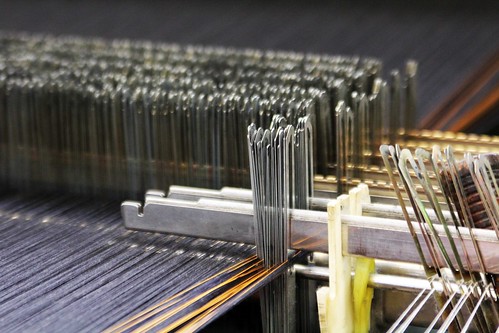
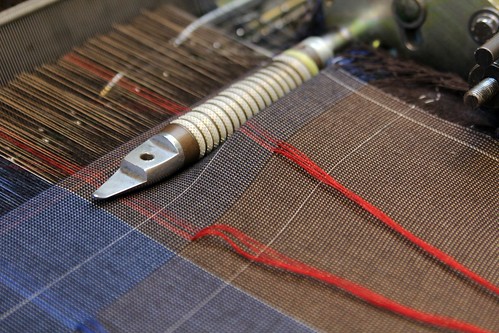
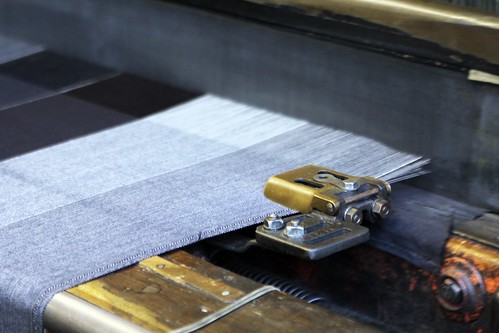
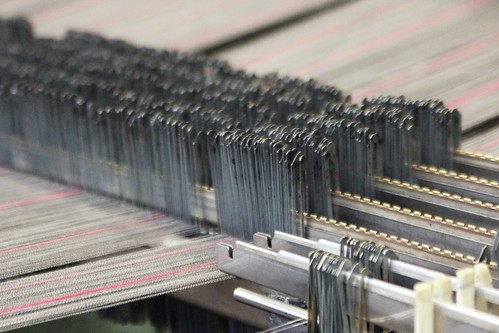
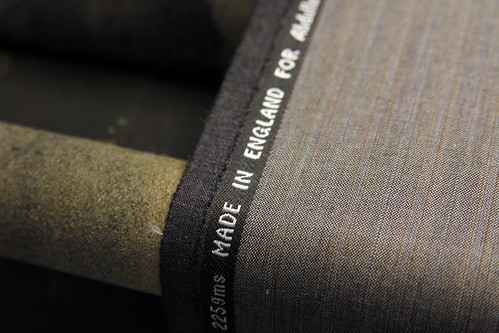
Weaving an intricate and dazzling group, Bulmer and Lumb Group is ever evolving, helping to drive the textile industry forward. For the last eight years the group has owned the world renowned Taylor and Lodge in Huddersfield. Reputations do not come about by chance. The fame Taylor and Lodge enjoys is built on over a century of experience and a deep appreciation for the methods and skills that go towards producing a superior product. The company has occupied its Rashcliffe Mills factory in Huddersfield, on the edge of the Yorkshire Moors, since its founding in 1883. Craftsmanship and well honed skills are essential to the product and it was a pleasure to be able to watch it all unfold in a space that has seen the same processes come together for centuries.

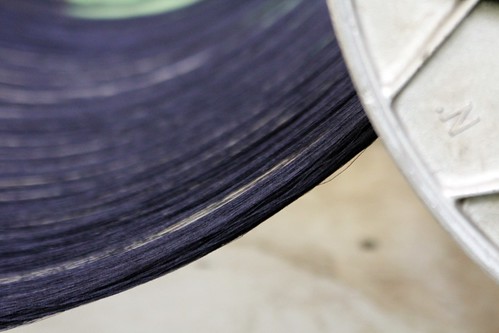
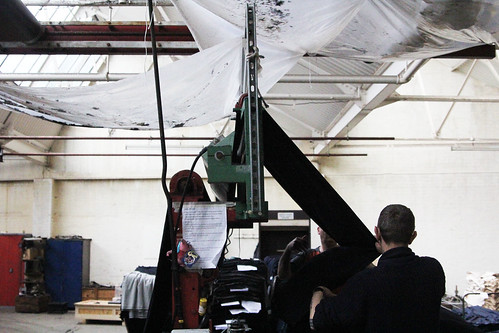
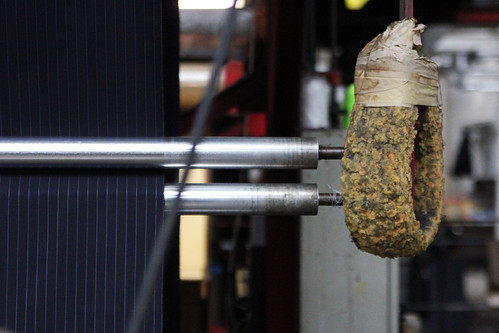
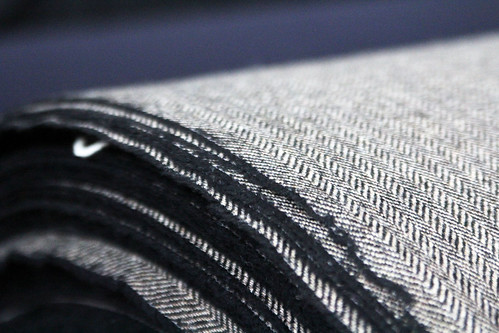
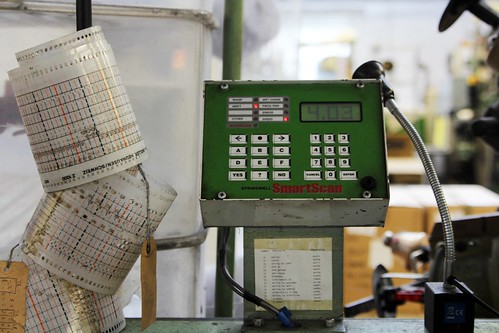
As I walked through and looked on at each process of construction, the balance between old and proven techniques and machinery from various eras since the industrial revolution, really left a lasting impression on me.

IMG_2241
IMG_2122
IMG_2172
IMG_2183
IMG_2131
IMG_2146
IMG_2141
IMG_2191
IMG_2171
IMG_2150
IMG_2167
IMG_2235
IMG_2233
IMG_2184
IMG_2206
IMG_2202
IMG_2209
IMG_2214
IMG_2217
IMG_2226

Through its careful selection and control of raw materials together with continual investment in the latest equipment, Bulmer and Lumb continue to push textile manufacturing to new heights. These elements ensure that the production processes are amongst the most efficient and balanced in the industry and provide all the essential elements for growth. Edward Waterhouse explains.

"Due to the fact that Bulmer and Lumb dyes its own raw material we are the world leaders in supplying Uniform fabrics, which have mix and match shade repeatability. We can guarantee that a fabric made from a top dyed yarn is the same shade from the 1stmetre to 100,000th metre. This then also lends itself to producing fine worsteds for suiting’s made by Taylor and Lodge, we use yarn from our own range but supplement them with yarn bought in to make a highly sort after fabric collection. With our skilled and experienced design team we can offer individuality to our customers on a made to order basis, differing from the uniform business which is primarily stock based.

Bulmer and Lumb will keep evolving to meet the tough demands of our customers. The blend we offer of our knowledgeable and experienced staff and up to date machinery, I feel we are well placed to increase our sales globally with the sales to new markets important. A point that I must stress is that due to the fact we dye in the UK, we have to adhere to a very strict code of practice of which many around the world will not have to."

Tuesday, 11 June 2013

The Hare, four swans, ten candles and you

Style Salvage Comp-1

This spring/summer 14 season sees Mr. Hare reach the landmark of ten collections old. Ten. Collections. Old. We remember our heart skipping a beat the moment our eyes focused on his black beauties in Purest Form for autumn/winter 09 like it was yesterday. Mr. Hare has always a been a work in progress driven by one man's passion and it shows no sign of resting on its well crafted heels. Time has flown by as we've been caught up in Marc Hare's whirlwind. From season to season there is constant evolution and revolution. One step after another, all eyes remain transfixed by Mr. Hare's fancy footwork. Having closely followed the label's continued rise, we're offering two readers the opportunity to be a part of the special occasion at London Collections: Men and to help blow out the candles at his after party this weekend. For a chance to join in with the festivities all you have to do is sign up to their mailing list. Easy. Just hot step and click here.
Monday, 10 June 2013

The craft of... W.T. Johnson & Sons

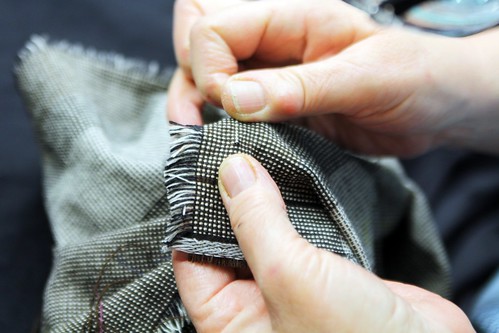
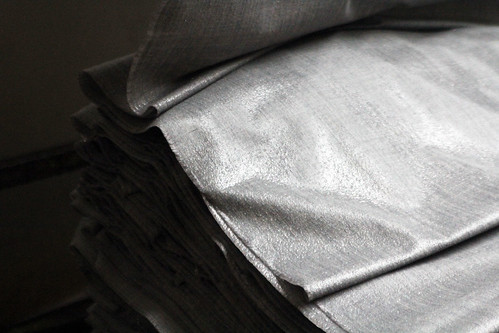
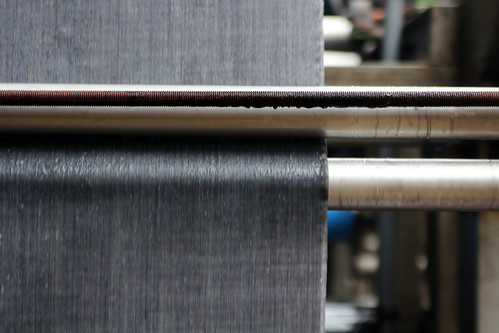
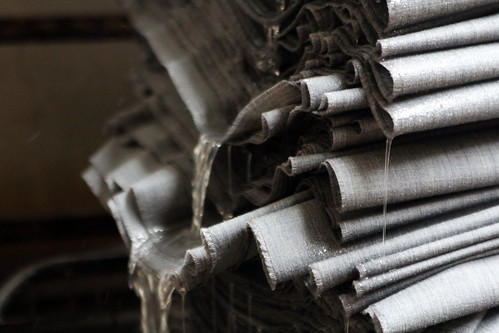
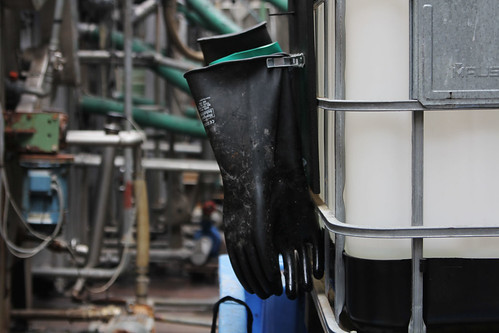
"Finishing is the instrumental process between weaving and garment making," Alan Dolly, W.T. Johnson & Son's Technical Manager begins as we embark on an intimate and extensive tour of this Textile Finishers' Bankfield Mills home. Having explored and celebrated the craft of both weaving and garment making across a plethora of previous posts, the world of finishing was wholly unfamiliar until my visit to Huddersfield with Woolmark and Lou Dalton a couple of ago. As London Collection: Men's curtain raising design talent researched the possibilities for spring/summer 14, my eyes were opened to the artistry and alchemy of the finishing touch.

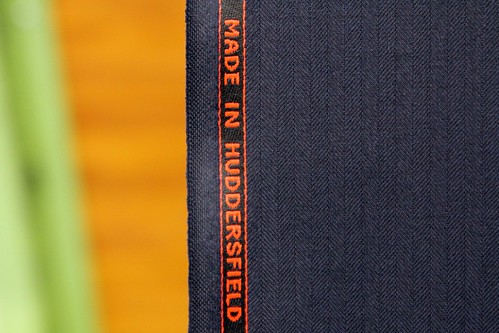
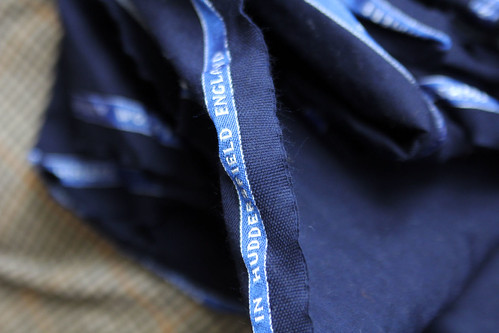
Helping to create unique garments that help distinguish themselves from all others, the finishing process – which invariably dictates the appearance, handle and performance attributes of a fabric – is receiving more attention than ever before. There's no better place to explore these processes than Huddersfield. The history of textile manufacture in England is intricately woven into the history of this town. For over seven hundred years, weavers have been attracted to this area of West Yorkshire by a combination of conditions ideal for sheep grazing and a plentiful supply of soft water streams for washing or scouring wool. By the mid nineteenth century the town had a well established reputation for the manufacture of fine worsteds, fancy tweeds, and woollens and there were several large woollen mills in and around the town. W. T Johnson & Sons was born out of this boom. One of the thriving mills was Glendenning’s where, in 1910, the middle-aged Walter Thomas Johnson arrived at the bold decision to take his skills as Foreman Finisher and set up his own, specialist finishing firm. It would prove to be a wise decision for, within a few decades, the large mills began to close one by one, beaten by cheaper offshore competition. Today, W. T Johnson & Sons is one of four cloth finishers left in Britain. They are a Huddersfield institution and have been on the same site for over one hundred years. "We're the only town in the world that can add value to a bit of fabric by having its name on the edge of the cloth and we're very proud of that," Paul Johnson excitedly exclaimed to Nicholas Crane on a recent episode of the BBC2's TOWN. This pride and passion is infectious.

With unmatched craft skills and expertise having been handed down through four generations of master fabric finishers, from Walter Thomson who started the company in 1910 to Paul and Dan Johnson who continue and evolve its offering, plus a skilled local workforce who today are seeing the business lead the world in the craft of fine fabric finishing. As I hovered over its hive of activity, it was obvious that despite being hugely proud of its heritage, this is a family run company that is constantly striving forward.

"The long term investment in machinery and careful selection of smart innovative machinery gives us a huge range of finishes and possibilities. Added to that we have the luxury of working on most of the wide range of fabrics that the area produces, so we have a very privileged view, and are consistently asked for something more. Hopefully we add value to everything we finish, whether £10/m or £1000/m.
Alan Dolly, Technical Manager at W.T Johnson & Sons.

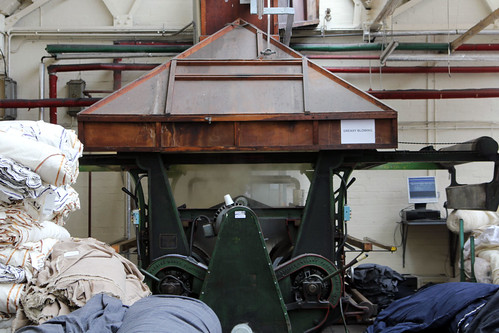
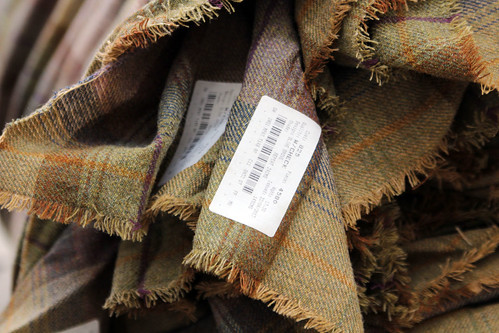
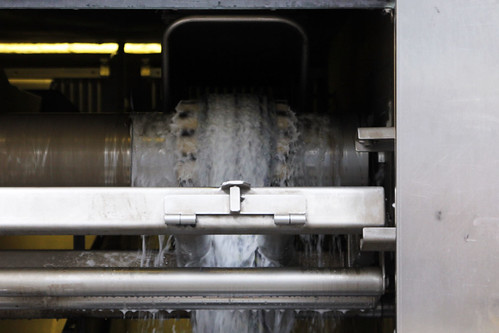
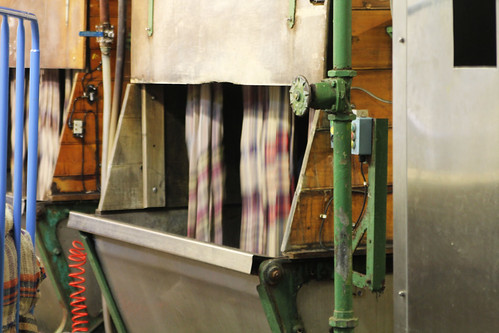
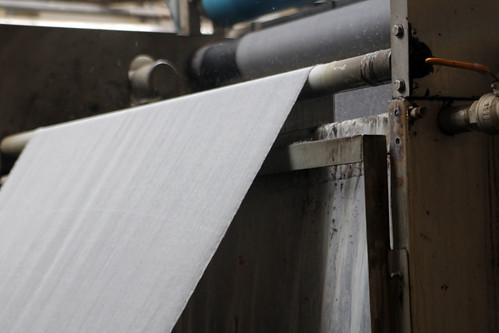
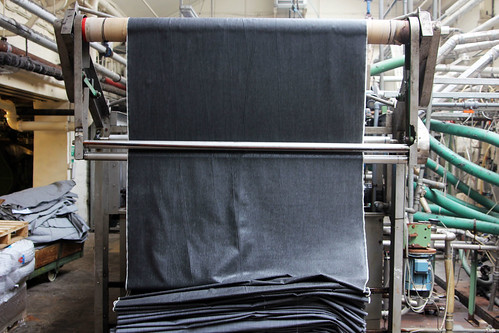
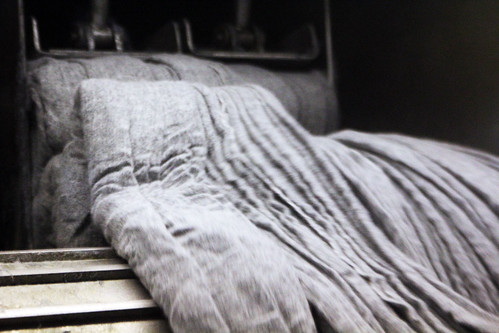
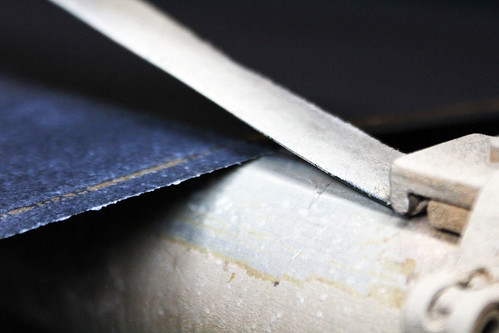
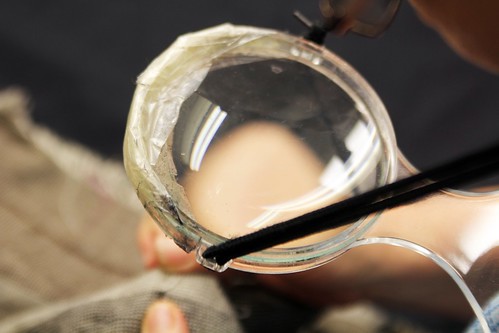
As I toured the space and bounced from machine to machine, I was amazed by the variety of finishing options. From milling to scouring, decating to drying and cropping, the opportunities to transform cloth are seemingly limitless. "The fact is that there are almost infinite possibilities and the market wants these differences more and more. With the right customer, finishing is recognised as an important part of the design process," explains Alan over the hum of a machine in full momentum. "As a commission business, our customers put a lot of trust in us to deliver and when we suggest and then hand over the finished article to their approval, it is very rewarding." As Lou Dalton's mind raced through her whims and finishing fancies, our senses were treated to a cacophony of sights and sounds, from the traditional wooden scouring dolly to jets, the familiar yet large scale image of tumbling cloth in dryers to the ultra high tech precision of Swiss machinery intricately removing surface fibres.

IMG_2022
IMG_2021
IMG_2024
IMG_2028
IMG_2031
IMG_2039
IMG_2043
IMG_2048
IMG_2055
IMG_2065
IMG_2061
IMG_2067
IMG_2068
IMG_2082
IMG_2086
IMG_2088
IMG_2098
IMG_2100
IMG_2103
IMG_2105
IMG_2108
IMG_2110
IMG_2111
IMG_2117
A cocktail of tradition and technology within the craft of the finishing touch.

From its Bankfield Mills home, W.T Johnson & Sons employs ninety skilled finishers and I was fortunate enough to interact with a few of them. As I happily snapped away I could clearly see their passion. The family ethos of the company‘ if we look after our employees, they’ll look after us,’ quietly echoes throughout the space. The workforce skill-base and perfectionist attitude is an invaluable part of the company’s success and helps to drive their goal to be the world leader in high quality textile finishing. "There is a strange relationship that develops over time between WTJ and the employees," explains Alan Dolly drawing the whistle stop tour to a close. "They clearly learn what is required of them and at the same time are 'looked after' and valued by the company. The work is hard at times and its essential the quality has to be very good. From recent figures thirty two per cent of the workforce have been here more than twenty years!" Has the demographic changed? "Historically textiles generally was a major employer in the area. People were able to find employment in their 'local mill'. We still have a large number of our team living locally, but the industry as an employer is a fraction of what it was in the 60’s and before. Recently we have had some success in convincing younger people that textiles can still offer a career, and have been able to start with hopefully the next crop of expert finishers."

With its insatiable appetite to collaborate in the creation of the finest and most innovative cloth, feeding the imagination of designers like Lou Dalton and exciting the research teams at Woolmark whilst upholding its tradition and investing in its future, W.T. Johnson & Sons offers a welcome reminder that the British manufacturing industry can still thrive.

LinkWithin

Related Posts with Thumbnails